
Apple Unveils Its First Touchscreen MacBook Pro With OLED PROLED XDR Display
· Show Me My IP · Apple
The new 14- and 16-inch MacBook Pro with PROLED XDR Display starts at $2,899, runs on M5 Pro and M5 Max chips and ships November 6, ending Apple’s long refusal to put a touchscreen on the Mac.
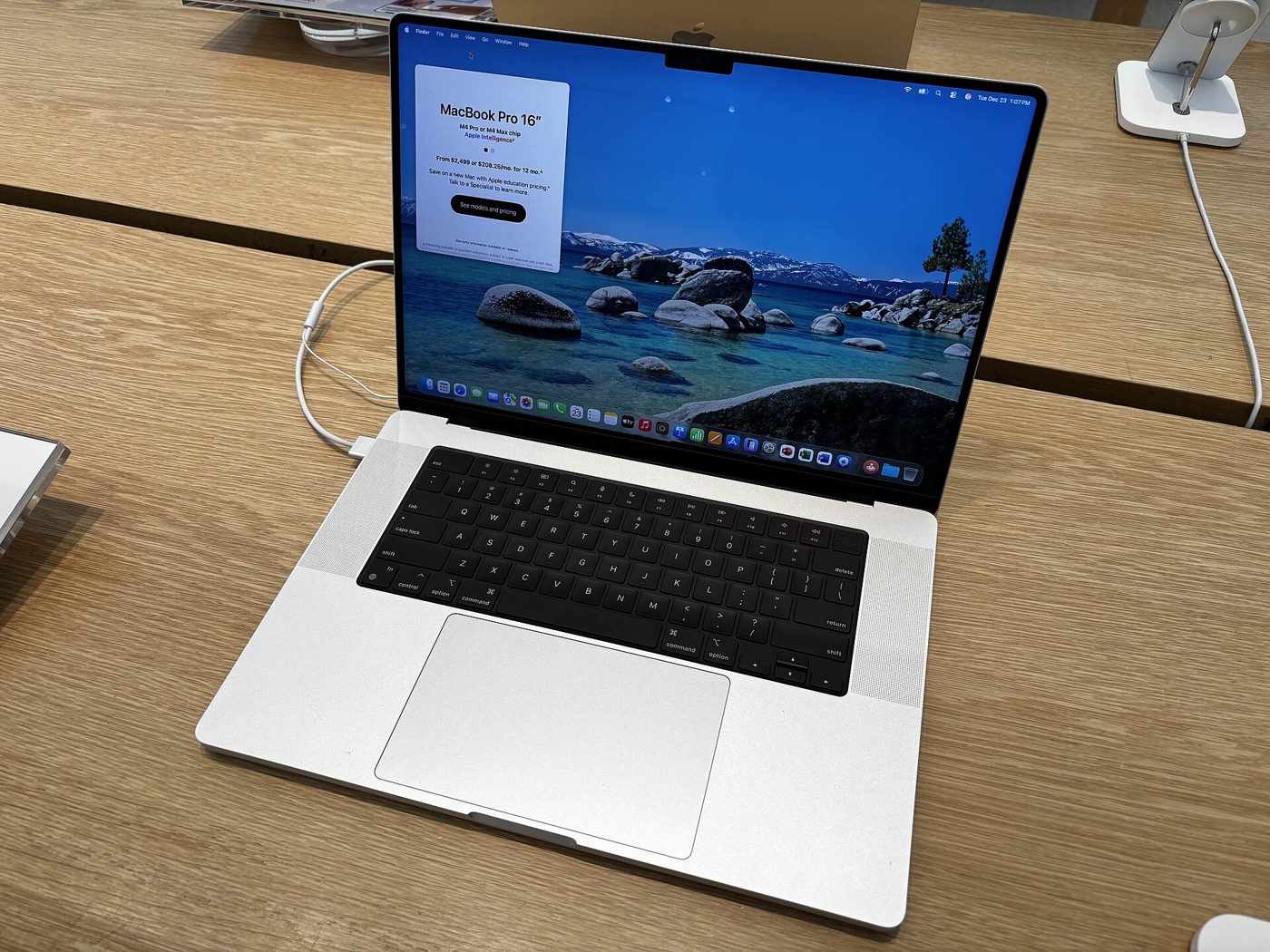
LOS ANGELES — Apple has announced its first touchscreen MacBook Pro, reversing a position the company defended for more than a decade. The new MacBook Pro with PROLED XDR Display, unveiled Wednesday, Oct. 28, at Apple’s “Pro and tell” launch experience in Los Angeles, pairs a touch-enabled tandem OLED screen with the M5 Pro and M5 Max chips in 14-inch and 16-inch sizes.
Prices start at $2,899 for the 14-inch model and $3,399 for the 16-inch model. Pre-orders opened on announcement day in 30 countries and regions, and the laptops arrive at customers’ doors and in Apple Stores on Friday, Nov. 6.
Why Apple’s First Touchscreen Mac Matters
Apple spent years dismissing the idea. Steve Jobs argued that touch surfaces don’t belong on a vertical screen, and as recently as 2021 Apple executives, including then–hardware chief John Ternus, said the Mac didn’t need a touchscreen because the iPad already served that role. Ternus is now Apple’s CEO, and the touchscreen MacBook Pro is his second marquee launch after the foldable iPhone Duo in September.
The company’s closest earlier experiment was the Touch Bar, a slim touch strip that replaced the function keys on the 2016 MacBook Pro and was later dropped. This time, the entire display responds to touch.
Johny Srouji, Apple’s chief hardware officer, called the laptop “a monumental step forward for the Mac.” Apple is aiming it squarely at the MacBook Pro’s core audience of photographers, designers, video editors and app developers.
How Touch Works on macOS
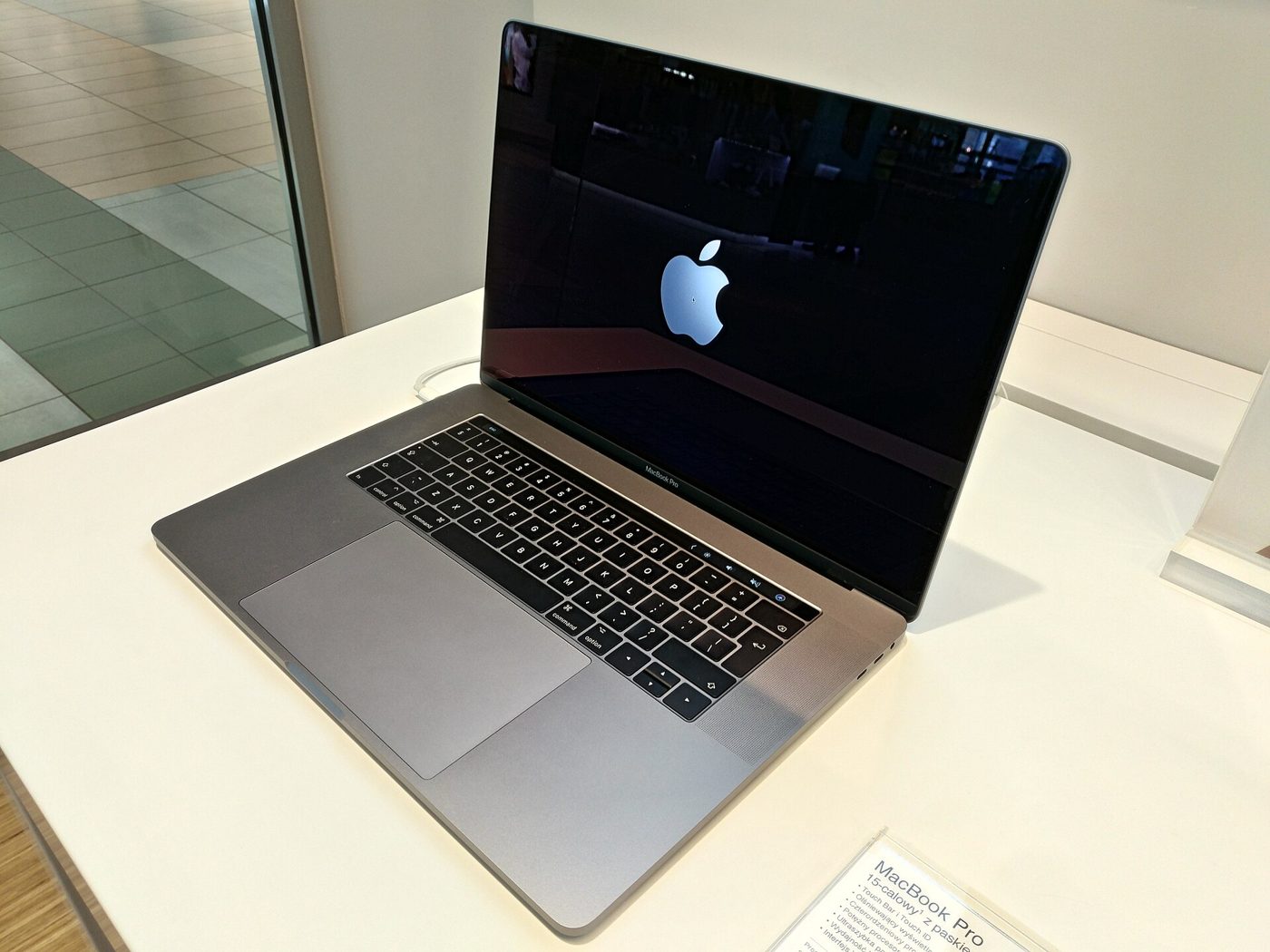
Apple is positioning touch as an extra input method rather than a replacement. The keyboard and trackpad are unchanged, and users can switch between them and the screen at will. On the display, users can tap, swipe to scroll, pinch to zoom, drag slides between presentations and double-tap a window to fill the screen.
Because macOS automatically treats a tap as a click, Apple says many existing Mac apps work with touch on day one. The touch sensor is built directly into the display panel to reduce lag, a redesigned hinge keeps the screen steady when pressed, and the glass carries a fingerprint-resistant coating.
Deeper touch support is still on the way. Apple says touch-optimized versions of Zoom, Canva, Microsoft Word and Excel, Adobe Lightroom and Blender will arrive later this year, while touch features for Final Cut Pro and Logic Pro come through Apple Creator Studio updates in November.
PROLED XDR Display: OLED Comes to the MacBook Pro
The touchscreen is only half the story. The new MacBook Pro is Apple’s first laptop with a tandem OLED panel, which Apple brands PROLED XDR. Because each pixel produces its own light, blacks are truly black: Apple rates the contrast ratio at 10,000,000:1, ten times the mini-LED MacBook Pro.
Peak HDR brightness climbs to 2,000 nits from 1,600, and the display adds support for the Adobe RGB color space used in photography and print work. The 16-inch model’s screen grows slightly to 16.3 inches. The notch is gone, replaced by a smaller Dynamic Island that shows live activity such as music playback and incoming calls.
MacBook Pro OLED Specs, Design and Battery Life
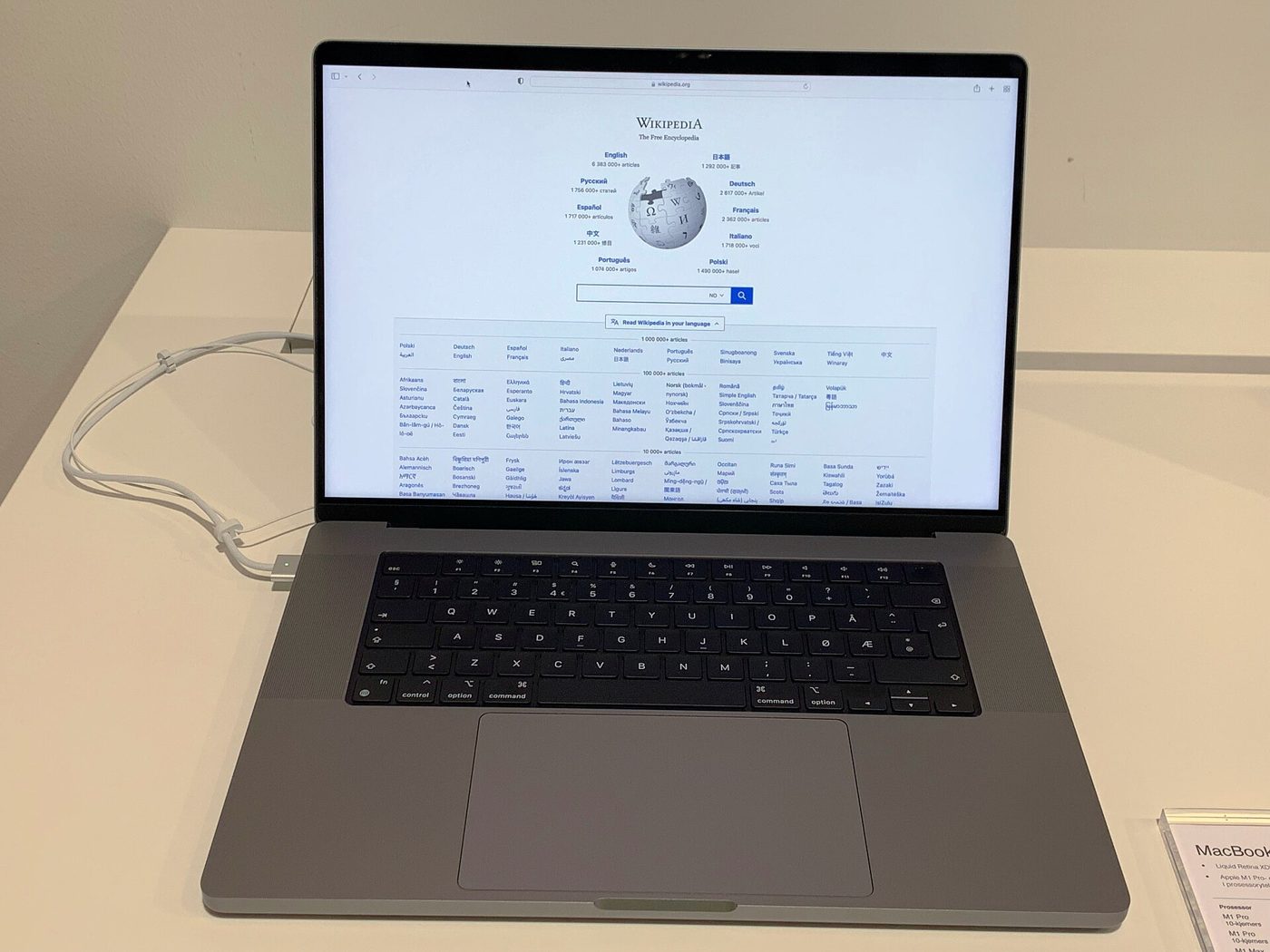
The thinner OLED panel lets Apple slim the chassis. The 14-inch M5 Pro model weighs 3.0 pounds, half a pound less than its mini-LED counterpart, and the 16-inch M5 Pro model drops 0.7 pounds to 4.0 pounds.
Inside are the same M5 Pro and M5 Max chips Apple launched in March, with up to 128GB of unified memory and three Thunderbolt 5 ports. A new six-speaker system promises 50% deeper bass, and the illuminated Apple logo returns to the lid for the first time in about a decade.
Apple rates the 14-inch M5 Pro model at up to 14 hours of web browsing and 22 hours of video streaming. The 16-inch M5 Pro model reaches 17 and 24 hours.
Touchscreen MacBook Pro Price and Release Date
| Model | Chip | Starting price (US) |
|---|---|---|
| 14-inch | M5 Pro | $2,899 |
| 16-inch | M5 Pro | $3,399 |
| 14-inch | M5 Max | $4,499 |
| 16-inch | M5 Max | $4,799 |
Education pricing starts at $2,749. Each touch model costs $400 more than a mini-LED MacBook Pro with the same chip, memory and storage, and those non-touch models remain on sale. The lineup also gained a 14-inch MacBook Pro with the new M6 chip at $1,999, announced Oct. 27 alongside an M6 iMac and an OLED iPad mini.
Touchscreen MacBook Pro: 3 Ups and 3 Downs
The ups
- The best screen Apple has put in a laptop. Tandem OLED, 10,000,000:1 contrast, 2,000-nit HDR peaks and Adobe RGB give creative pros a display that rivals dedicated reference monitors.
- Touch as an option, not a compromise. Keyboard and trackpad are untouched, existing apps respond to taps immediately, and a stiffer hinge addresses the wobble that plagues many touchscreen laptops.
- Thinner and lighter. At 3.0 pounds, the 14-inch M5 Pro model is the lightest MacBook Pro Apple currently sells, and it trades the notch for a tidier Dynamic Island.
The downs
- A steep premium. Touch and OLED add $400 over an equivalent non-touch MacBook Pro, and the entry model costs $900 more than the new $1,999 M6 MacBook Pro.
- Last-generation silicon. The flagship uses March’s M5 Pro and M5 Max rather than the newer M6. The 14-inch touch model is rated for 14 hours of web browsing versus 16 hours on the M6 model, and the base unit ships with a 70W charger, below the 96W Apple requires for fast charging.
- Software still catching up. Touch-optimized third-party apps won’t arrive until later this year, Spotlight’s move to the Dynamic Island depends on Siri AI that remains in beta in macOS 27.2, and Apple has said nothing about Apple Pencil support.
The Bottom Line
The MacBook Pro with PROLED XDR Display is the biggest change to how people use a Mac in years. Its OLED screen and lighter design are easy wins, but the $2,899 starting price, older chips and unfinished app support mean it will appeal most to creative professionals who will use every pixel. For everyone else, the cheaper M6 MacBook Pro remains a strong alternative. Pre-orders are open now, with deliveries beginning Nov. 6.